A central line needs consistent protection, especially during bathing or when clothing rubs against its dressing. A waterproof patch can help keep water away, but it is not a replacement for the sterile dressing or your care team’s instructions. Use only a product intended for central-line care, and follow its directions for placement and removal. The patch should sit smoothly, without pulling the dressing or pressing on the insertion site. Small details matter. A lifted edge, trapped moisture, or a dressing that shifts can make protection less reliable.
For anyone asking “why use waterproof patches for central line maintenance,” the practical answer is to reduce water exposure during routine activities while keeping the prescribed dressing in place. As central-line guideline author Mary H. O’Grady and colleagues state, “Replace dressings that are damp, loosened, or visibly soiled.” A waterproof cover does not cancel that advice. Check the dressing after bathing, and contact your care team if it becomes wet, loose, dirty, or damaged. Do not peel it back just to inspect beneath it unless your clinician has shown you how. Some instructions can feel fussy, and real life is messy; that is worth admitting. Still, a careful check and clear guidance can prevent guesswork. This article explains how to choose, apply, and remove a waterproof patch while protecting the line and its dressing.
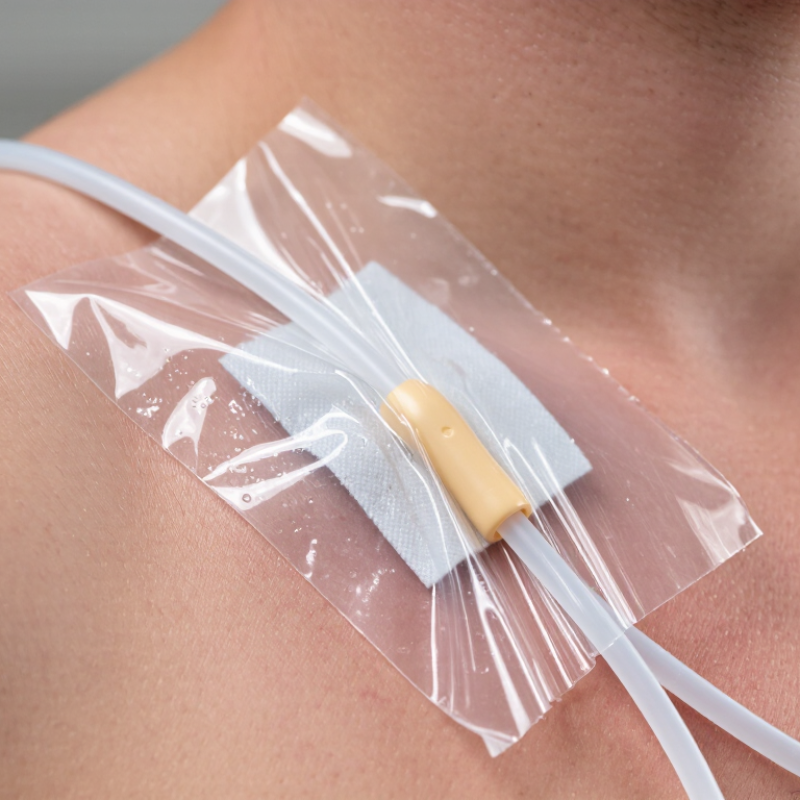
Understanding the Role and Limits of Waterproof Patches
A waterproof patch can help keep a central-line dressing dry during a brief shower. It is an outer barrier, not a replacement for the sterile dressing or the prescribed cleaning routine. The distinction matters. Water may seep under lifted edges, especially near the catheter exit site or beneath tubing. Avoid baths and swimming unless the care team specifically approves them.
The CDC’s Guidelines for the Prevention of Intravascular Catheter-Related Infections specify that transparent dressings should generally be changed at least every seven days, while gauze dressings should be changed every two days. A dressing must be changed sooner if it becomes damp, loose, or visibly soiled. These intervals are clinical guidance, not permission to leave a damaged dressing in place. Follow the instructions from your care team and the dressing manufacturer.
Before showering, check that the line and dressing are secure, then apply the cover without pulling the catheter. Remove it afterward and inspect the edges. A dry surface can still hide a leak. If the dressing underneath is wet, lifted, or contaminated, contact your clinician for advice; do not simply cover the problem with another patch. Even careful routines can miss a small gap, so checking matters.
How to Use Waterproof Patches for Central Line Care
Waterproof covers can help keep a central-line dressing dry during a shower. They do not replace routine dressing changes or protect the line during submersion.
Routine replacement intervals: CDC guidance recommends changing transparent dressings at least every 7 days and gauze dressings every 2 days. Change a dressing sooner if it becomes damp, loose, or visibly soiled. A waterproof cover does not make a dressing sterile, prevent infection, or make swimming or soaking safe. Follow your care team’s instructions.
Source: CDC, Guidelines for the Prevention of Intravascular Catheter-Related Infections.
Checking Care Instructions, Supplies, and the Catheter Site
Before using a waterproof patch, read the central-line care plan and the product instructions. Confirm how long the patch may stay on, whether the catheter site must remain visible, and how to manage bathing. Follow the care team’s directions if they differ. Keep it simple. Gather clean hands, the approved dressing supplies, and a disposal bag before touching the area. Do not cut a patch near the catheter or place an unapproved cover over a loose dressing.
Inspect the site in good light before covering it. Look for redness, swelling, tenderness, drainage, or a dressing that is damp, dirty, or lifting. CDC guidance says to replace a central-line dressing if it becomes damp, loose, or visibly soiled; transparent dressings are generally changed at least every seven days, according to clinical circumstances. A waterproof patch is not a replacement for the prescribed sterile dressing. If the site is hidden or the dressing has shifted, pause and contact the care team rather than sealing over the problem.
The risk deserves attention: CDC’s 2022 National and State Healthcare-Associated Infections Progress Report recorded a 9% decrease in reported central line-associated bloodstream infections compared with 2021. That population-level change does not prove that waterproof patches prevent infection. They mainly help keep the dressing dry during bathing. Remove or replace coverings only as instructed, and report fever, new pain, or drainage promptly. Even careful checks can miss subtle changes. That is worth remembering.
Preparing the Skin and Central Line for Patch Application
Preparing the skin well matters more than pressing a waterproof patch firmly. Wash your hands and gather the supplies recommended by your care team. Check the catheter site for redness, swelling, drainage, tenderness, or a loose dressing. If anything looks unusual, contact your clinician before changing the dressing. Do not pull, twist, or reposition the line.
Follow your clinic’s instructions for removing the old dressing and cleaning the skin. Use only the antiseptic and sterile technique specified for your catheter. Let the skin dry completely; damp antiseptic can irritate skin and weaken adhesion. Keep the line and its connection points from touching nearby surfaces. A small missed spot matters. Avoid shaving the area, and do not apply creams or powders unless your care team approves them.
Once the skin is dry, place the waterproof patch without stretching it over the catheter or trapping moisture beneath it. Smooth the edges gently. The patch should not replace the prescribed sterile dressing unless your care team specifically says it can. I still pause before sealing the edges, because a fold can hide wetness. If the dressing becomes damp, loose, or soiled, follow your clinic’s replacement instructions rather than simply adding another layer.
Applying the Waterproof Patch Without Pulling the Line
Before showering, check that the central-line dressing is clean, dry, and firmly attached. Wash and dry your hands, then prepare a waterproof cover approved by your care team. Keep the tubing supported with a little slack; never pull it taut to make the cover fit. A small loop can help prevent a sudden tug. It is easy to rush this part.
Center the cover over the dressing without pressing on the catheter or insertion site. Smooth the adhesive onto dry skin, working outward, and avoid stretching the cover tightly across the line. Do not tape the catheter down or change the sterile dressing unless your care team has shown you how. The seal should feel secure, not constricting. Check that the line can move gently without catching at an edge.
After showering, remove the cover slowly, peeling it back from the skin rather than pulling upward on the tubing. Pat the area dry; do not rub the dressing. If the dressing becomes wet, loose, or dirty, contact your care team for instructions. Follow their guidance if it differs from general advice. A cover can leak, even when applied carefully.
Removing the Patch and Checking for Signs of Irritation or Infection
Remove a waterproof patch only at the time and in the way your care team recommends. Wash and dry your hands, then prepare a clean surface and any supplies you were taught to use. If the patch covers the central-line dressing, do not pull at the dressing or change it unless you have been trained to do so. Go slowly. Ease the patch back over itself while supporting nearby skin. Do not tug on the catheter. If the dressing lifts, becomes wet, or no longer seals, contact your care team for instructions.
Look closely at the skin and dressing in good light. Check for new redness, warmth, swelling, soreness, itching, or a rash where the adhesive touched. Also notice cloudy fluid, drainage, an unpleasant smell, or a dressing that looks damp or dirty. Small details matter. A faint mark can come from adhesive, but worsening redness or pain deserves attention. I might miss a subtle change when checking in a hurry, so compare with how the area looked before, if you can.
Call your care team promptly about possible infection signs, including spreading redness, pus, increasing tenderness, or fever or chills. Seek urgent medical advice if you feel suddenly unwell. Keep the line secured, and avoid applying creams or household products unless your clinician has approved them. When unsure, ask rather than improvise.
How to Use Waterproof Patches for Central Line Care? - Removing the Patch and Checking for Signs of Irritation or Infection
| Stage |
What to Do |
What to Check |
When to Contact Your Care Team |
| Before removing the waterproof cover |
Follow the instructions provided by your care team. Wash and dry your hands. A waterproof cover used for bathing is not a replacement for the sterile central-line dressing. |
Check that the cover is intact and that the line and dressing have stayed dry. |
If the sterile dressing is wet, loose, damaged, or no longer seals the site, contact your care team promptly for instructions. Do not leave a wet dressing in place. |
| Removing the cover |
After bathing, gently peel the waterproof cover away from the skin, taking care not to pull or tug on the catheter or its dressing. Remove it according to the product and care-team instructions. |
Make sure the catheter remains secured and the sterile dressing is still firmly in place. |
If the catheter moves, becomes partly dislodged, or the dressing lifts, stop handling the area and contact your care team immediately. Do not push the catheter back in. |
| Checking the skin and dressing |
Look at the skin around the dressing without lifting or changing the sterile dressing unless you have been trained and instructed to do so. |
Look for new or worsening redness, warmth, swelling, tenderness, pain, rash, or skin breakdown. Mild temporary adhesive marks can occur, but worsening or persistent irritation should be reported. |
Contact your care team about increasing irritation, pain, redness, warmth, or swelling, especially if symptoms spread or worsen. |
| Checking for possible infection |
Observe the line exit site and surrounding skin. Keep the dressing clean, dry, and intact. |
Watch for pus or other drainage, an unpleasant odor, increasing tenderness, or red streaks near the site. Also note fever or chills. |
Contact your care team promptly for drainage or suspected infection. Seek urgent medical advice for fever or chills, following the temperature threshold and instructions given by your care team. |
| If the dressing gets wet or the skin reacts to the cover |
Do not cover a wet dressing with another waterproof patch or attempt an untrained dressing change. Avoid reusing a single-use cover. |
Check whether moisture has reached the sterile dressing and whether the adhesive has caused a rash or skin injury. |
Call your care team for guidance on replacing a wet or compromised dressing and on choosing a suitable cover if irritation occurs. |
Follow your central-line care team's instructions, as dressing type and care procedures can vary. Do not remove or change the sterile dressing unless you have been trained and told to do so.
FAQS
It helps keep the dressing dry during a brief shower. It is only an outer barrier.
No. Keep the prescribed sterile dressing in place unless your care team specifically advises otherwise.
Make sure the line and dressing are secure. Apply the cover without pulling the catheter.
Avoid baths and swimming unless your care team approves them. Water can seep beneath lifted edges.
Contact your clinician for instructions. Do not cover a wet or lifted dressing with another patch.
Follow your clinic’s cleaning instructions. Let the skin dry completely, and avoid creams or powders unless approved.
Check for redness, warmth, swelling, soreness, itching, drainage, or a rash. Small details matter.
Call about spreading redness, pus, increasing tenderness, fever, or chills. Ask rather than improvise.
Go slowly. Ease the patch back over itself while supporting nearby skin. If unsure, pause and ask your care team.
Conclusion
Waterproof patches can help keep the area around a central line dry during bathing, but they do not replace routine line care or guarantee a complete seal. Understanding why use waterproof patches for central line maintenance starts with knowing their limits: use one only when appropriate for the dressing and care plan, and follow the instructions provided by your healthcare team. Before applying it, gather the recommended supplies and inspect the catheter site for redness, swelling, drainage, tenderness, or a loose or damaged dressing.
Prepare the surrounding skin as directed and make sure it is clean and dry. Position the patch carefully over the dressing without tugging, bending, or putting pressure on the catheter or its connections. After bathing, remove the patch gently, taking care not to disturb the line or dressing, and check the site and skin for irritation or signs of infection. If the dressing becomes wet, loose, or contaminated, or you notice concerning changes, contact your healthcare provider for guidance.

 Nexus Medical