Choosing the right bandage for high-mobility joints is crucial for effective treatment. High-mobility joints, like the knees and elbows, endure more stress during daily activities. According to a report by the American Journal of Sports Medicine, injuries in these areas account for over 30% of sports-related injuries. Hence, understanding how to select the best bandage for high-mobility joints is essential.
The appropriate bandage provides support while allowing for necessary movement. Research indicates that improper support can lead to complications and delayed recovery. Studies show that bandages made from breathable materials promote healing and comfort. They prevent excess moisture buildup, which can cause skin issues. However, selecting the right type and size can be challenging. Many people overlook the importance of fit and adjustability, leading to discomfort and ineffective support.
Selecting a bandage isn't just about immediate relief. It's also about long-term joint health. Experts emphasize that a poorly chosen bandage may contribute to instability or further injury. Taking time to understand various bandage types can lead to better decisions. Be mindful and consider your specific needs carefully to ensure optimal support and healing.
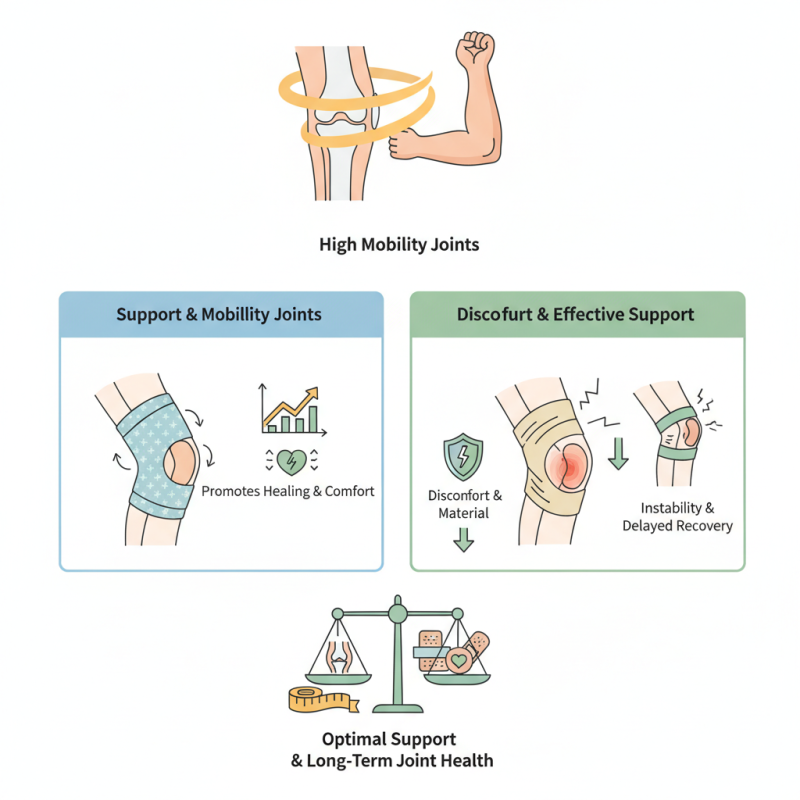
Understanding the Importance of Bandages for High Mobility Joints
Bandages play a crucial role in supporting high mobility joints, such as the knees and elbows. These joints experience frequent motion, making them prone to injuries. A proper bandage not only stabilizes them but also aids recovery. For athletes and active individuals, understanding the right type of bandage can lead to better performance and fewer injuries.
When choosing a bandage, consider the material and level of compression. Elastic materials provide flexibility, allowing for easier movement. A bandage that is too tight can hinder circulation, while one that is too loose may not offer sufficient support. The ideal bandage allows some movement, enabling individuals to engage in daily activities or sports.
It's also important to reflect on personal experiences with different bandages. Some may prefer a cohesive bandage for its secure fit, while others might find a splint more comfortable. Not every solution works for everyone. Learning from past experiences is key to finding what works best for each unique situation. It's a trial-and-error process that requires patience and adjustment.
Types of Bandages Suitable for High Mobility Joints
When choosing bandages for high mobility joints, consider the different types available. Elastic bandages are a popular choice. They provide support while allowing flexibility. A study published in the *Journal of Sports Medicine* found that elastic bandages reduce swelling effectively. They range in tension and length, catering to various needs.
Another option is kinesiology tape. This type of bandage is designed to mimic skin elasticity. According to a report from the *International Journal of Athletic Therapy & Training*, kinesiology tape can enhance movement and decrease pain. It also promotes circulation, which aids in healing. However, not everyone benefits from it equally. Some users report irritation.
Rigid bandages are useful for acute injuries but can limit mobility. A review in the *American Journal of Orthopedics* noted that rigid bandages are effective for immobilization. Still, over-reliance may hinder recovery for high mobility joints. Choosing the right bandage involves assessing individual needs and injury types. Users should seek advice from healthcare professionals for better outcomes.
Comparison of Bandage Types for High Mobility Joints
The following chart illustrates the effectiveness of different types of bandages suitable for high mobility joints based on various factors such as flexibility, support, and breathability.
Key Features to Look for in High Mobility Joint Bandages
When selecting a bandage for high mobility joints, certain features are crucial. Look for flexibility. The bandage should adapt to the body's movements without restricting range. Materials like elastic fabric provide comfort and support simultaneously. Ensure the bandage is breathable. This prevents moisture buildup, reducing the risk of irritation on the skin.
Consider the method of application. Some bandages use adhesives, while others wrap or tie. A good bandage for high mobility joints should allow for easy adjustments. This helps in achieving the right level of compression. It aids in minimizing swelling during activity. Additionally, pay attention to the thickness of the bandage. Thinner options can be less bulky, allowing for seamless movement.
It's important to reflect on your specific needs. Not every bandage works for everyone. Some may experience chafing or discomfort. Testing a few options can help identify what feels best. A well-chosen bandage can enhance your activity without causing distractions. Prioritize features that offer both support and comfort.
Application Techniques for Optimal Support and Comfort
Applying bandages effectively around high mobility joints, like knees and elbows, requires attention to detail. A 2021 study in the Journal of Sports Medicine emphasized that the right application techniques provide both support and comfort. Factors such as joint movement during activities must be considered. Wrapping too tightly can hinder blood circulation, while a loose bandage may not provide adequate support.
Start by ensuring the skin is clean and dry. Use a gauze pad for any open wounds, followed by layering. Begin wrapping from a stable point, working towards the joint. The bandage should cover the joint without restricting normal motion. Research indicates that 30% of athletes experience discomfort due to improper application techniques. This aversiveness often stems from excessive pressure or uneven tension.
Periodic adjustments are essential. Regular check-ins can prevent the bandage from shifting, which might cause irritation or loss of support. An effective bandage should maintain its position during dynamic activities. According to a 2022 report by the American College of Sports Medicine, around 25% of injuries in high-mobility joints are linked to inadequate support. Proper application helps in reducing these occurrences significantly.
When to Seek Professional Advice for Joint Bandage Use
When it comes to joint injuries, seeking professional advice is crucial. High mobility joints like knees and elbows are particularly vulnerable. An incorrect bandage might not support the joint properly, leading to further injury. Many people rush to self-treat, thinking they know best. However, understanding the nuances of bandaging these joints requires expertise.
Professional guidance ensures that you choose the right material and technique. A healthcare provider can assess the injury's severity and recommend the proper compression and support level. They might suggest specialized techniques that can enhance healing. Self-diagnosis can lead to mistakes. Trusting a professional helps avoid complications.
Signs that you need to seek advice include persistent pain, swelling, or decreased mobility. If the bandage feels too tight or too loose, it’s time to consult a specialist. Being attentive to such signals is essential. Ignoring them could result in longer recovery times. Don’t hesitate to ask for help; it’s a step towards effective healing.
How to Choose the Best Bandage for High Mobility Joints? - When to Seek Professional Advice for Joint Bandage Use
| Criteria |
Description |
Recommended Type of Bandage |
When to Seek Professional Advice |
| Material |
Breathable and moisture-wicking fabric |
Cotton or elastic bandages |
If skin irritation occurs |
| Size |
Fit should allow full range of motion |
Adjustable bandages |
When swelling appears |
| Type of Joint |
Targeting specific joints such as knees or elbows |
Joint-specific support braces |
If there is significant pain |
| Compression Level |
Provides support while not restricting circulation |
Elastic compression bandages |
If numbness or tingling occurs |
| Duration of Use |
Short-term for injury or longer-term for management |
Depending on diagnosis |
If condition worsens over time |
FAQS
: Bandages support joints like knees and elbows. They help stabilize and aid recovery from injuries.
Look at material and compression level. Elastic materials allow movement, while tight bandages can restrict blood flow.
A bandage should allow some movement. If it feels overly constricting or doesn’t support, adjust as needed.
Elastic bandages provide support and flexibility. They can help reduce swelling effectively for various needs.
Kinesiology tape mimics skin elasticity. It enhances movement, alleviates pain, and promotes circulation. Not everyone finds it beneficial.
Rigid bandages stabilize acute injuries but limit movement. They may hinder recovery for high mobility joints if overused.
No, choices vary based on personal experiences. Some prefer cohesive bandages, while others like splints for comfort.
Reflect on past experiences and be open to trial and error. Adjust until you find a solution that suits your needs.
Yes, consulting experts can provide personalized recommendations and improve recovery outcomes based on your situation.
Some users experience irritation with certain bandages. It’s important to monitor your skin and consider alternatives if reactions occur.
Conclusion
When considering how to select the best bandage for high-mobility joints, it is crucial to understand the unique demands placed on these joints during activity. High-mobility joints, such as the knees and elbows, require bandages that not only provide support but also allow for a full range of motion. Various types of bandages, including elastic wraps and specialized joint supports, can be suitable, depending on the level of protection and flexibility needed.
Key features to look for in these bandages include breathability, stretchability, and comfort to prevent irritation during movement. Proper application techniques can enhance the effectiveness of the bandage, ensuring it remains secure yet comfortable. However, if you experience persistent pain or instability, it’s important to seek professional advice to ensure that you are using the appropriate support for your specific needs.

 Nexus Medical