2026 Best CE Certified Syringes Safety Standards Guide

Time:2026-10-26 Author:Oliver
0%

Choosing a syringe for clinical use involves more than checking a CE symbol. It requires evidence that the device meets applicable European safety, performance, and quality requirements. This guide explains what are the safety standards for CE certified syringes and how those requirements affect daily handling.

A reliable assessment begins with the intended purpose. A disposable injection syringe should deliver accurate volume, resist leakage, and maintain smooth plunger movement. Its materials should support biological safety under ISO 10993 evaluation principles. Sterile products also need validated sterilization, intact packaging, and a defined shelf life. ISO 7886 is commonly referenced for sterile, single-use syringes. However, the exact standard set depends on design, use, and market classification.

Look closely.

Manufacturers should maintain technical documentation, risk management records, test results, and post-market monitoring. Under the EU Medical Device Regulation, conformity assessment may involve an independent notified body, depending on the device classification and applicable route. CE marking indicates conformity with relevant requirements; it does not replace careful supplier evaluation. That distinction matters.

In practice, inspect graduations under bright light, confirm the lot number, and examine the cap or blister for damage. Procurement teams should also verify declarations, certificates, traceability details, and storage instructions. Even experienced buyers can overlook small inconsistencies between packaging and technical files. This guide therefore combines regulatory context with practical checkpoints, while acknowledging an important limitation: standards support safety, but they cannot eliminate every clinical or manufacturing risk.
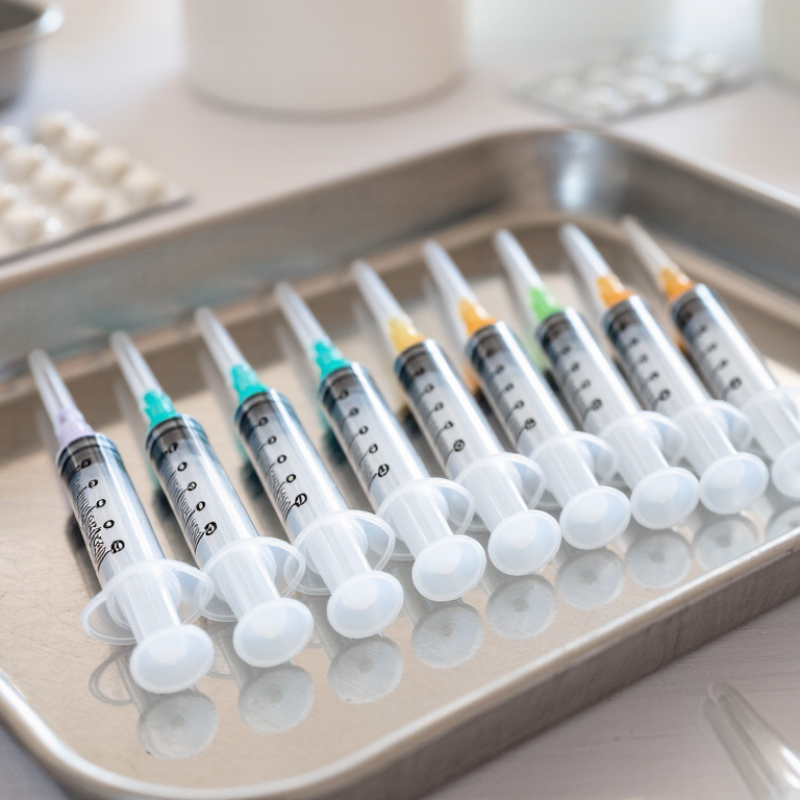
2026 Best CE Certified Syringes Safety Standards Guide

CE Certification and Its Role in Syringe Safety

CE certification plays a central role in syringe safety across the European market. It shows that a syringe meets applicable medical device requirements before it reaches healthcare professionals. The process examines design, materials, manufacturing controls, labeling, and risk management. It does not mean the product is completely risk-free.

A reliable assessment considers practical use. For example, the barrel should remain clear under examination lighting. The plunger should move smoothly without sudden resistance. Graduations must stay readable after handling, while sterile packaging should protect the device until use. Safety features also need clear instructions and consistent performance. Technical documentation, clinical evidence, and post-market monitoring support these claims. For some devices, an independent conformity assessment is required.

In my experience, small details often expose larger weaknesses. A loose cap, blurred marking, or damaged seal can affect safe administration. No checklist is perfect. Human factors, storage conditions, and rushed procedures may still create problems after certification. Manufacturers and healthcare teams should review complaint data, training records, and batch traceability regularly. CE marking is therefore not an endpoint. It is part of an ongoing safety discipline, supported by evidence, careful inspection, and honest correction when a process fails.

Essential Design and Material Standards for CE Certified Syringes

2026 Best CE Certified Syringes Safety Standards Guide

Essential Design and Material Standards for CE Certified Syringes

A CE-marked syringe should begin with controlled design, not attractive packaging. Its barrel needs clear graduations, consistent wall thickness, and enough contrast for quick reading. The plunger should move smoothly without sudden resistance. A secure gasket helps prevent leakage and supports accurate delivery. Low-dead-space designs can reduce residual fluid, but they may require tighter manufacturing control.

Material selection is equally important. Medical-grade polypropylene is commonly used for barrels because it offers strength, clarity, and sterilization compatibility. Elastomeric stoppers must be tested for biocompatibility, extractables, and leachables under ISO 10993 principles. Manufacturers should also assess sterilization effects, chemical compatibility, and package integrity. Standards such as ISO 7886, ISO 14971, and ISO 13485 can support performance, risk control, and quality management. Still, compliance depends on the complete device and its technical documentation.

Tips: Check graduation accuracy under normal lighting. Inspect the gasket for uneven edges. Confirm that packaging remains sealed after transport testing. Do not treat a smooth plunger as proof of complete safety. No syringe is perfect. A design may pass laboratory testing yet feel awkward during real handling. Feedback from clinicians should therefore influence usability reviews, even when the first design appears technically acceptable.

ISO 7886-1 Syringe Nominal Capacities

The chart presents common nominal syringe capacities covered by ISO 7886-1 for manually operated, single-use syringes. Capacity alone does not indicate clinical suitability, sterility, biocompatibility, or conformity with all applicable CE requirements.

Reference basis: ISO 7886-1 nominal capacity categories. CE-marking assessment may also involve applicable requirements for safety, risk management, biological evaluation, sterility, packaging, labeling, and post-market surveillance.

Step-by-Step Safety and Performance Testing Requirements

2026 Best CE Certified Syringes Safety Standards Guide

Step-by-Step Safety and Performance Testing Requirements

A CE-marked syringe should begin with a documented design review, not a printed symbol. Confirm intended use, patient contact duration, volume range, and injection method. Applicable requirements may include the EU Medical Device Regulation and relevant ISO standards, such as ISO 7886-1. Classification determines the required conformity assessment route. A notified body may be involved.

Test the syringe in controlled stages. Measure barrel dimensions, graduation accuracy, plunger movement, leakage, dead space, and hub connection strength. Record results under normal and worst-case conditions. For example, a 10 mL syringe should deliver its stated volume without sticking or sudden force changes. Inspect the seal after pressure testing. Evaluate materials for biocompatibility under ISO 10993 when patient contact requires it. Validate sterilization, packaging integrity, and shelf-life after aging studies. Small details matter.

Tips: Use calibrated force gauges and traceable measuring tools. Keep raw data, failed samples, corrective actions, and retest records. Review samples from different production lots. A clean result from one batch proves little. Human factors testing can reveal unclear graduations or awkward plunger handling. The process may still contain gaps. Recheck assumptions, especially when suppliers, materials, or sterilization cycles change. Get an independent regulatory review before placing the CE mark.

Labeling, Traceability, and Documentation for Regulatory Compliance

For procurement teams, CE-marked syringes need more than a visible conformity symbol.

The mark signals regulatory conformity, not automatic product quality. That distinction matters.

The World Health Organization estimates that about 16 billion injections occur worldwide each year.

At that scale, one unreadable lot code can obstruct a whole investigation. Labels should show the manufacturer, device identifier, lot or serial number, expiry date, sterile status, and storage conditions. Use recognized symbols consistently. Small print creates large risks.

Under the EU Medical Device Regulation

Unique Device Identification supports device traceability across the supply chain. Records should connect the UDI, lot number, incoming inspection, release decision, sterilization evidence, and distribution destination.

The WHO Global Patient Safety Action Plan reports that approximately one in ten patients experiences harm in healthcare, with more than half considered preventable.

Documentation cannot prevent every failure, but it can shorten the search.

Keep the declaration of conformity, risk-management evidence, biocompatibility results, sterilization validation, and post-market surveillance records under controlled revision. ISO 13485:2016 emphasizes documented quality controls and traceable records.

Paper logs still work. Only if handwriting survives scrutiny.

In practice, audits may reveal a gap between carton scanning and inner-pouch identification. That gap deserves honest review.

Test recall drills with real lot numbers, damaged labels, and incomplete entries.

A perfect record is unlikely. A recoverable record is essential.

How to Select and Use CE Certified Syringes Safely

Selecting CE-marked syringes safely starts with intended use, not price. Choose the correct capacity, needle compatibility, graduation accuracy, and dead-space design. A CE mark indicates conformity with applicable European requirements, but it does not guarantee suitability for every procedure. Check the Declaration of Conformity, UDI, expiry date, sterile packaging, and manufacturer instructions. For regulated medical devices, verify alignment with Regulation (EU) 2017/745 and relevant standards, such as ISO 7886 for sterile hypodermic syringes.

WHO estimates that about 16 billion injections occur globally each year, while unsafe injection practices remain a preventable source of infection and injury (WHO, WHO Guideline on the Use of Safety-Engineered Devices, 2016). Inspect every package for moisture, tears, or broken seals. Wash hands, prepare a clean surface, and use one sterile syringe for one patient and one procedure. Never reuse a syringe, even after changing the needle. Never recap used needles. Dispose of them immediately in a rigid sharps container near the point of care. Simple details matter.

The CDC reports roughly 385,000 needlestick and other sharps injuries annually among hospital-based healthcare personnel in the United States (CDC/NIOSH, Preventing Occupational Exposures to Bloodborne Pathogens, 2000). That estimate is older, so current exposure levels may differ. I still recheck fit and packaging. Human error survives good documentation. Staff should receive practical training, report near misses, and follow local clinical procedures. A reassuring label is not a substitute for careful handling.

2026 Best CE Certified Syringes Safety Standards Guide - How to Select and Use CE Certified Syringes Safely
Safety Dimension Applicable Requirement or Reference What to Verify Safe Selection or Use Action Priority
Regulatory and Documentation Checks
CE marking Regulation (EU) 2017/745 on medical devices (EU MDR) Confirm that the CE mark appears on the product, sterile barrier packaging, or accompanying documentation where applicable. Do not use a product that has an unclear, incomplete, or suspicious CE marking. Confirm that the mark matches the official documentation. Required
EU Declaration of Conformity EU MDR conformity documentation Check the device identification, intended purpose, applicable legislation, manufacturer information, and declaration date. Obtain and review the current declaration when purchasing, qualifying, or auditing a supplier. Required
Notified body involvement EU MDR conformity-assessment requirements Where third-party assessment is required, verify the notified body number shown with the CE mark and confirm that its scope covers the device. Do not assume that every medical device requires the same conformity route. Verify the device classification and conformity-assessment pathway. Verify
Intended purpose and classification EU MDR intended-purpose and classification rules Confirm whether the syringe is intended for injection, aspiration, irrigation, medication delivery, laboratory use, or use with a pump. Select only a syringe whose intended use, route, duration, and accessories match the clinical procedure. Classification can change with intended purpose and features. Required
Instructions for use EU MDR information requirements; EN ISO 20417 Review instructions for compatible needles, connection type, filling method, maximum pressure, storage, sterilization status, and disposal. Use the syringe only within the stated conditions. Keep the instructions available to clinical and procurement staff. Required
UDI and traceability EU MDR unique device identification requirements, where applicable Record the unique device identifier, lot or batch number, expiry date, and supplier details when traceability is required. Maintain lot-level records for high-risk procedures, recalls, incident investigations, and stock rotation. Verify
Technical and Material Selection
Basic syringe design EN ISO 7886-1 for sterile, single-use, manual syringes Check barrel integrity, plunger movement, stopper fit, graduation visibility, dead space, and leakage performance. Choose a size and design that provides accurate dosing while allowing controlled handling during the intended procedure. Required
Powered injection compatibility EN ISO 7886-2 for syringes used with power-driven syringe pumps Confirm compatibility with the specific pump, pressure range, flow rate, syringe size, and connection system. Do not place a manual-use syringe on a powered pump unless the instructions explicitly permit that application. Required
Needle compatibility EN ISO 7864 for sterile, single-use hypodermic needles Match needle gauge, length, bevel, hub, and connection type to the route and procedure. Use a compatible needle and confirm that the connection is secure before filling or administration. Required
Materials and biocompatibility EN ISO 10993 series for biological evaluation of medical devices Review material information, patient-contact duration, chemical compatibility, and potential extractables or sensitizers. Use products validated for the intended medication, solution, tissue contact, and exposure time. Do not mix incompatible drugs or materials. Required
Graduation and dose accuracy Applicable product specifications and EN ISO 7886-1 performance requirements Check graduation units, smallest graduation interval, readability, plunger alignment, and the required dose tolerance. Select the smallest practical syringe capacity that supports accurate measurement without exceeding the required volume. Required
Luer or other connection security Applicable connector requirements and product instructions Inspect the connector for damage, obstruction, looseness, leakage, and incompatibility with the needle or extension set. Perform a secure connection check before use. Never force mismatched connectors or modify the syringe or needle. Required
Sterility, Packaging, and Storage
Sterile barrier packaging EN ISO 11607 packaging requirements for terminally sterilized medical devices Inspect seals, pouches, caps, labels, and packaging for tears, punctures, moisture, opened edges, or loss of integrity. Reject any package that is damaged, wet, open, or questionable. Do not attempt to re-seal or reuse it. Required
Sterilization information Applicable sterilization process and validated manufacturer instructions Identify the sterilization method and confirm that the package remains intact and within its validated shelf life. Do not re-sterilize a product labeled for single use unless the manufacturer and applicable regulations specifically authorize it. Required
Expiry date and lot control Manufacturer labeling and quality-system traceability Check the use-by date, lot number, storage conditions, and stock rotation status before opening. Apply first-expire, first-out inventory control. Quarantine expired or unidentifiable stock. Required
Storage conditions Manufacturer-labeled temperature, humidity, light, and handling limits Confirm that storage conditions have been maintained and that products were protected from crushing, heat, freezing, and direct sunlight. Store in a clean, dry area and prevent compression or bending of packages. Follow the labeled conditions rather than generic assumptions. Required
Safe Use and Disposal
Aseptic preparation Applicable infection-prevention procedures and local clinical protocols Check hand hygiene, clean preparation area, medication identity, dose, route, patient, and expiry before opening. Use aseptic technique, avoid touching sterile connection points, and keep the syringe capped until connection or administration. Required
Single-use control Product labeling and infection-prevention requirements Determine whether the syringe is labeled single use and whether it has contacted a patient, medication container, or non-sterile surface. Use a new sterile syringe for each patient and each entry into a medication container when required by protocol. Never share used syringes. Never Reuse
Air removal and priming Procedure-specific clinical instructions Check for visible air, leaks, incomplete filling, plunger movement, and correct dose after priming. Remove air according to the approved procedure. Do not tap, expel, or prime medication in a way that compromises sterility or dose accuracy. Required
Needlestick prevention Local occupational-safety and sharps-management requirements Assess whether a safety-engineered needle or no-touch technique is appropriate for the procedure. Do not recap used needles by hand unless a documented procedure specifically requires it. Dispose of sharps immediately in an approved sharps container. Required
Abnormal product response Quality-management and incident-reporting procedures Watch for leakage, cracked barrels, blocked needles, inaccurate graduation, unusual plunger resistance, or package damage. Stop use, isolate the affected lot, document the event, and report it through the healthcare facility or applicable regulatory process. Required
Disposal Local healthcare-waste and sharps-disposal regulations Identify whether the syringe contains a needle, medication residue, hazardous substance, or biological contamination. Place used syringes and needles directly into the correct puncture-resistant container. Do not bend, break, separate, or manually manipulate used needles. Required
Important: CE marking demonstrates conformity with applicable European Union medical-device requirements; it does not replace clinical training, risk assessment, aseptic technique, product-specific instructions, or local healthcare regulations. Always verify the current labeling and applicable legal requirements before procurement or use.

FAQS

What information should appear on a syringe label?

The label should show the manufacturer, device identifier, lot or serial number, expiry date, sterile status, and storage conditions. Small print can create serious traceability problems.

Does a CE mark guarantee that a syringe suits every procedure?

No. It indicates conformity with applicable requirements, not universal suitability. Check capacity, needle compatibility, graduation accuracy, and dead-space design.

Which documents should procurement teams review?

Review the declaration of conformity, risk-management evidence, biocompatibility results, sterilization validation, and post-market surveillance records. Keep revisions controlled.

How can a syringe be traced through distribution?

Connect the unique device identifier and lot number with incoming inspection, release decisions, sterilization evidence, and distribution destinations. Test the trail using real lot numbers.

What packaging defects require rejection?

Inspect every package for moisture, tears, punctures, or broken seals. Do not use compromised sterile packaging. Simple details matter.

Can a syringe be reused after changing the needle?

No. Use one sterile syringe for one patient and one procedure. Changing the needle does not make reuse safe.

How should used needles be handled?

Do not recap used needles. Place them immediately in a rigid sharps container near the care area. Keep the container within easy reach.

What should staff do when records contain gaps?

Report missing entries, near misses, and damaged labels honestly. Paper records can work, but unclear handwriting weakens them. A perfect record is unlikely.

How should organizations prepare for a product recall?

Run practical recall drills using incomplete entries, damaged labels, and actual lot numbers. Confirm that carton records match inner-pouch identification.

Why is staff training still necessary with clear labeling?

Labels support safe handling but cannot replace training or local procedures. Recheck packaging, fit, and preparation steps. Human error survives good documentation.

Conclusion

This guide explains how CE certification supports the safety, quality, and reliable performance of syringes intended for medical use. It outlines the design and material principles that help reduce contamination, leakage, breakage, dosing errors, and accidental injury. The article also introduces key safety and performance checks, including dimensional accuracy, fluid tightness, mechanical strength, sterility assurance where applicable, and compatibility between components and their intended contents. It addresses the question, “what are the safety standards for CE certified syringes,” by presenting a practical framework for understanding conformity requirements without focusing on any specific manufacturer.

In addition, the guide describes the importance of clear labeling, batch identification, traceability, technical documentation, risk evaluation, and post-market monitoring. It concludes with practical advice for selecting syringes according to their intended application, inspecting packaging and expiration information, following aseptic handling procedures, and disposing of used products safely. These measures help users and organizations maintain consistent quality, support regulatory compliance, and promote safer medical procedures.

Oliver

Oliver

Oliver is a seasoned marketing professional with a wealth of expertise in driving brand awareness and engagement. With a deep understanding of our company's product offerings, he consistently delivers high-quality content that enriches our professional blog. His insights not only shed light on......